Linen Care 101: How to Wash, Store, and Extend the Life of Your Linen Bedding
A practical, editorial guide to treating linen and other natural-fiber bedding with care—featuring brand-specific tips from Naturepedic, Coyuchi, and DownTown Company, and weaving in lessons from history, science, and design.
Why Linen Requires Gentle Handling
Linen is more than a fabric; it is a living material that carries the stories of flax cultivation, traditional weaving, and sustainable craft. Its natural strength comes from flax fibers, which respond best to respectful washing and mindful storage. Linen’s distinctive traits—cool hand feel, breathability, moisture-wicking, and a texture that softens with age—make it beloved for bedding. But those same properties demand a thoughtful care routine to preserve its hand, texture, and longevity.
Historically, linen has been prized since ancient times for its cool comfort in hot climates and its resilience across generations of use. Today, modern mills and sustainable brands continue that legacy, blending heritage techniques with contemporary finishes. The care rules that follow honor both the science of fabrics and the artistry of the craftspeople who weave and finish linen products.
What is Linen Made Of and How It Behaves in Laundry
Linen is derived from the flax plant. The fiber’s unique structure—long, strong, and hollow—allows it to absorb moisture quickly, wick away dampness, and dry faster than many other natural fibers. This makes linen wonderfully breathable and temperature-regulating, but it also means the fabric loves a gentle touch. Washing linen at high temperatures can cause fiber fatigue, shrinkage, and reduced loft. The best care embraces cool-to-warm water, gentle cycles, and fabrics that support the fabric’s lifelike texture.
In this article, we emphasize practical, actionable steps that apply across linen sheets, pillowcases, duvet covers, and even decorative pieces like linen shams. We also reference common care guidelines you’ll find in reputable brands such as Naturepedic, Coyuchi, and DownTown Company—each with nuanced recommendations aligned to their product finishes and textile blends.
Chapter 1: Washing Linen — Temperature, Cycles, and Techniques
Washing linen bedding properly begins with choosing the right water temperature and cycle. The goal is to remove soils while preserving the fiber’s integrity and its beloved texture. Below are distilled guidelines you can apply to most linen sheets, duvet covers, and pillowcases.
- Water temperature: Use cold to warm water (approximately 30–40°C / 86–104°F). This reduces the risk of shrinkage and maintains the fabric’s natural hand. Some brands may allow slightly warmer cycles for sturdier finishes, but always check the product care label first.
- Cycle selection: Choose a gentle or delicate cycle with a short or medium wash duration. High agitation can cause pilling, fraying at edges, and loss of the linen’s smooth yet textured surface.
- Detergent choice: Use a mild, pH-neutral detergent. Avoid enzymatic or chlorine-heavy cleaners that may degrade the fibers over repeated washes. For those with sensitive skin, consider fragrance-free formulas.
- Pre-treating: For spots, treat with a gentle stain remover or a mild soap solution before washing. Avoid harsh scrubs that can abrade fibers.
Brand excerpts:
- Naturepedic: Their linen line often features stone-washed finishes that feel wonderfully soft from the first wash. Follow the care label and use a gentle cycle to maintain the stone-washed hand.
- Coyuchi: Known for organic, European flax linens, Coyuchi care instructions commonly emphasize cold-to-warm water and gentle laundering to preserve the fabric’s character and environmental goals.
- DownTown Company: Layla Linen collections typically benefit from a delicate wash cycle and avoiding aggressive detergents to keep the linen’s natural texture and warmth intact over time.
Chapter 2: Drying Linen — Drying Methods that Preserve Texture
Drying linen correctly is as important as washing. Linen fibers benefit from even air and controlled heat. How you dry linen can influence its softness, wrinkle behavior, and overall lifespan.
- Tumble dry: If you use a dryer, choose a low heat or delicate setting. Remove promptly to minimize deep wrinkles and reduce static. Consider a line-dry option when possible for maximum texture retention.
- Line drying: A gentle line-dry in a shaded area helps preserve color and fiber integrity. When clothespins are used, avoid clipping the fabric in ways that create marks; allow air to circulate evenly.
- Post-dry care: While linen dries, you’ll notice natural wrinkling that many find appealing for its relaxed, lived-in look. If you prefer a crisper surface, a light ironing or steaming on slightly damp linen can restore a smooth finish without scorning its natural character.
Brand notes:
- Naturepedic: Their linen sheets are stone-washed for immediate softness; a gentle approach to drying complements the finished texture rather than fighting it.
- Coyuchi: Their organic linen often benefits from air-drying to protect the fibers and preserve color, especially in lighter hues.
- DownTown Company: Layla Linen textiles perform well with low heat and line-drying; this approach maintains the fabric’s airy hand.
Chapter 3: Storing Linen — Wrinkle Management and Longevity
Storage is more than tucking linen away; it’s a chance to protect fibers from moisture, pests, and long-term creasing. Linen loves a cool, dry, and well-ventilated space. Consider the following strategies to keep your textiles pristine between washes.
- Dry and clean storage: Ensure linens are completely dry before folding and storing. Any residual moisture invites mold and mustiness, especially in humid climates.
- Environment: Store linens in a breathable cotton bag or in an open crate to allow airflow. Avoid plastic bags that trap moisture and can lead to musty odors.
- Folding approach: Fold linens with minimal creasing; if necessary, layer with tissue paper to prevent deep creases. For decorative pieces like pillowcases and shams, preserve shape by rolling rather than stacking tightly.
- Seasonal rotation: If you rotate bedding across seasons, store out-of-season pieces separately to reduce wear on your current sheets.
Chapter 4: Color, Dyes, and Finish — How to Care for Linen’s Natural Beauty
Linen’s natural color range—from warm flax to cool whites and earth tones—develops character with washing and use. The fiber accepts dyes and finishes differently than cotton or synthetics, so pay attention to colorfastness and finish recommendations on care labels. Stone-washed linens often start with a deliberately softened surface that adapts to washing and wearing over time.
When you’re careful with color-treated linens, you can maintain the fabric’s depth and the hue’s vividness. Brand-specific notes can help: Naturepedic, Coyuchi, and DownTown Company each offer finishes that respond well to routine care while keeping color stable and fibers strong.
Chapter 5: The People Behind Linen — Three Key Figures Across Time
Linen has inspired countless artisans, scholars, and designers. Here are three influential figures from different eras who illuminate linen’s enduring appeal.
1) Cennino Cennini (c. 1360–c. 1427) — The Renaissance Master of Craft Documentation
In his treatises on painting, drawing, and crafts, Cennini’s manuals reveal a world where textile arts carry knowledge, tradition, and meticulous technique. Although best known for painting, his era’s textile practices echo in linen’s care, weaving, and finishing traditions. Linen’s role in daily life—from clothing to home textiles—was foundational to how people expressed aesthetics and durability. Cennini’s emphasis on process, patience, and mastery mirrors linen care’s patient, methodical approach today.
2) Johannes Kepler (1571–1630) — The Scientist Who Made Textiles a Matter of Measurement
Kepler’s contributions to astronomy and natural philosophy intersected with practical observations about materials, weaving, and geometry. The field of textile science owes much to early empirical thinking, and linen’s behavior under different looms and conditions resonates with Kepler’s scientific mindset: observe, measure, and refine. His era’s data-collection ethos informs today’s care guidelines, where precise temperatures, cycle times, and finishing steps yield consistent results across many linen products.
3) Greta Gerwig (b. 1983) — Modern Design Voice Elevating Everyday Textiles
As a contemporary filmmaker and designer, Gerwig embodies a modern sensibility that values texture, sustainability, and practical elegance. Her approach mirrors linen’s current renaissance: natural fibers, artisanal craft, and a “less is more” aesthetic. In today’s bedroom aesthetics, linen becomes a vehicle to express mindful living, craftsmanship, and comfort—principles that brands like Coyuchi and DownTown Company champion through product design and storytelling.
Chapter 6: Brand-Driven Care Notes from Three Linen Leaders
To make linen care concrete, here are compact, brand-specific reminders drawn from familiar names in the space. These notes reflect real-world practice and are designed to be quick references you can apply at home.
- Naturepedic Linen: Favor room-temperature washing with a gentle cycle, then line-dry or tumble-dry on low. Stone-washed linens benefit from minimal intervention; avoid harsh treatments that could strip texture.
- Coyuchi Linen: Favor cold-to-warm water and a mild, eco-conscious detergent. Maintain color integrity by washing with like colors and using a gentle cycle. Linen benefits from air circulation in storage and a breathable environment.
- DownTown Company Layla Linen: Emphasize a soft, lived-in feel by choosing a gentle wash and line-drying. The fabric’s delicate texture responds well to careful handling and regular use, improving with time.
These brand-informed tips align with the broader themes of linen care—gentle handling, low-energy processing, and a preference for natural finishes that evolve gracefully.
Chapter 7: A Practical Week-By-Week Linen Care Plan
To help you adopt a sustainable, long-term linen care routine, here is a simple, scalable plan you can follow. It assumes a typical set of linen bedding pieces and a home with standard washing facilities.
- Week 1: Wash linen sheets and pillowcases on a gentle cycle with a mild detergent at 30–40°C. Dry on low heat or line-dry. Iron only if you prefer a crisper finish.
- Week 3: Rotate to a fresh set if you have multiple linen pillowcases or duvet covers. Repeat the washing process, paying attention to any color transfer from darker hues.
- Week 6: Inspect for wear and tear—edges, hems, and zipper closures. Address small maintenance needs promptly to prolong life.
- Seasonal care: For linen blankets and heavier coverlets, adjust washing and drying temperatures and consider a professional cleaning cycle for delicate embroidery or lace trims.
By following a measured routine, linen bedding stays breathable, comfortable, and visually timeless, while supporting sustainable wear and tear patterns.
A Curated Reading List and Resource Kit
Whether you’re a student, educator, or curious consumer, a few curated resources help you deepen your understanding of linen and natural fibers. Below are recommended reading, documentaries, and courses, spanning textile history, fiber science, and sustainable fashion.
- Historia del lino: A concise overview of linen’s history and global trade routes.
- Textile science primers: Basics of fiber structure, weave mechanics, and finishing technologies.
- Documentaries on sustainable textiles: Explorations of flax farming, linen production, and the evolving textile industry.
A Note on the Product List
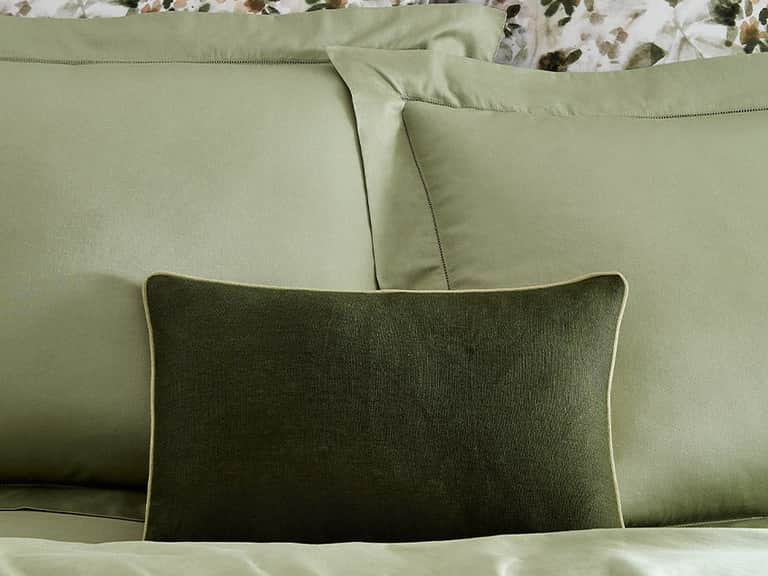
The article references a select linen product from the provided list to illustrate care considerations in a real-world context. The highlighted item is the Juniper Pillow Cover — a 70% linen, 30% wool artisanal cover with a washed finish designed to pair with inserts for a refined, natural look.
Juniper Pillow Cover (5095) — 70% linen / 30% wool, washed finish, with two looks in one. Care: wash at max 30°C on wool/hand wash programs; line dry if possible; iron with steam on slightly damp linen. Inset not included.
Product note: This item embodies artisanal linen craft with refined finishes. Availability and pricing may vary by retailer.
Putting It All Together — A Linen Care Mindset
Care for linen bedding is a respectful practice that honors the fiber’s history, its modern innovations, and the people who weave and finish these textiles. The care principles—gentle washing, mindful drying, and thoughtful storage—are universal. With brand-specific guidelines from Naturepedic, Coyuchi, and DownTown Company, you can tailor routines to your products while maintaining the linen’s authentic texture and breathable feel.
As you implement these guidelines, you might also explore the broader bedding ecosystem: sustainable fibers, responsible production, and the ethics of ownership. Linen care becomes a daily ritual of respect for the fiber, the makers, and your own comfort.
This article integrates insights from historical textile figures, modern textile science, and brand-informed care practices to provide a practical, editorial perspective on linen care for bedding enthusiasts.