Bedding & Styling
How Linen Pillow Shams Layer with Decorative Pillows
A beautifully layered bed isn’t about piling on every cushion in the house. It’s about giving each pillow a purpose: linen shams bring a relaxed, tactile backdrop, while decorative pillows add a little color, shape, and personality. With the right proportions and an easy-care plan, the result can feel polished without making bedtime a production.
Start with what the pillows need to do
Before choosing colors or arranging a single cushion, think about how the bed is used. A pillow sham dresses a bed pillow, often with a decorative border, flange, or tailored finish. It can help create a composed backdrop during the day, then be removed when the bed is ready for sleep. A standard pillowcase, by contrast, is generally designed for the pillow you sleep on. Decorative pillows are usually accents: they add a change in scale, a contrasting surface, or a confident punctuation mark at the front of the arrangement.
That distinction matters in real life. If a bed is used every night, the styling should be easy to undo and put back together. Sleep pillows can sit behind shams, or you can place the shams over pillows that are removed before bed. Decorative accents can be set aside in a basket or on a bench. The best arrangement is not only attractive in a photograph; it works when someone is tired, carrying laundry, or making the bed in a hurry.
It also helps to remember that the words “sham” and “pillowcase” are not always used consistently by makers. Check the listed dimensions, closure, and intended use rather than relying on the product name alone. A pillowcase with a flange can make a crisp, finished layer, while a square sham may be intended for a larger decorative insert. Accurate sizing is the quiet secret behind a bed that looks considered instead of lumpy.
Let linen set the scene
Linen has a character all its own. Woven from flax fibers, it is known for a dry, natural hand and visible texture. The surface may show gentle irregularities in the yarn, and a washed finish often gives it a softer, more relaxed drape. These qualities make linen especially good at keeping a bed from feeling too formal. Even in a restrained color scheme, its weave contributes depth that a completely smooth fabric might not provide.
That texture is a useful starting point for pillow styling. A linen sham can serve as the visual bridge between plain sheets and more expressive accent pillows. If the sheets have a smooth finish, such as cotton sateen, linen can introduce contrast without requiring a dramatic print. If the bed already has textured linen sheets, a sham in a similar family can create continuity, while a decorative pillow in a different weave gives the eye somewhere new to land.
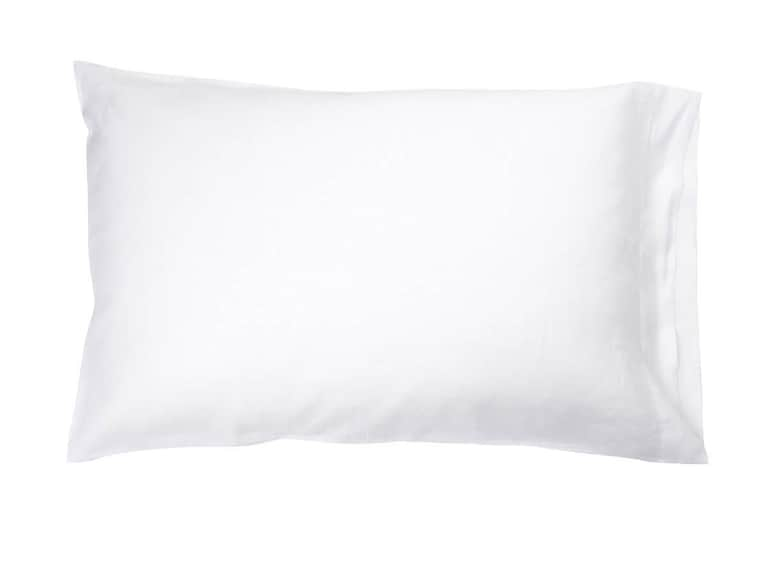
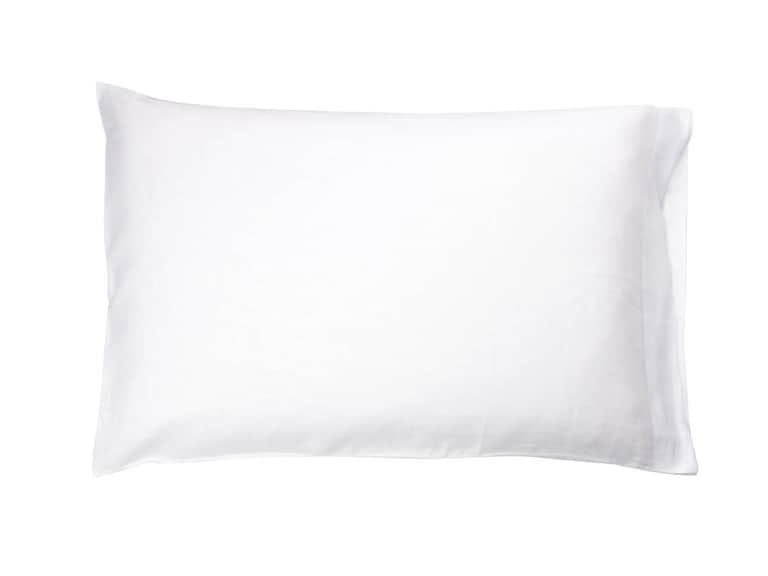
For a particularly quiet look, choose linen in a color close to the sheets or duvet. The effect is subtle, but not flat: differences in weave, stitching, and light-catching texture keep the layers distinct. A classic white linen pillowcase, such as the Classics Geneva Pillow-case, offers a lightweight, flange-finished option that can contribute a crisp edge to a pale bedding palette. For a more tailored detail, the Classics Victoria Pillow-case has a refined hemstitch finish. These are pillowcases rather than decorative shams, so consider them as part of the sleep-pillow foundation and check dimensions before planning the full arrangement.
And linen need not look perfectly pressed to look intentional. Its natural creases are part of its appeal. A slightly rumpled sham can make a neatly made bed feel welcoming rather than stiff—particularly when the rest of the room has a calm, understated palette.
Build the layers from large to small
A simple formula helps keep the arrangement balanced: begin with the largest pillows at the back, then move toward smaller ones. On a queen or king bed, sleeping pillows or larger shams can establish the foundation. One or two smaller decorative pillows in front add definition, while a single lumbar cushion can finish the row if the bed has enough width. The exact number depends on the mattress, pillow dimensions, and how much open space you like to see.
Think of the bed as a composition, not a storage shelf. A large stack can overwhelm a narrow bed, obscure an attractive headboard, or leave nowhere convenient to put the pillows at night. A more edited arrangement often feels more generous because each piece has room to be noticed. If you are unsure, remove one accent pillow and look again. The lighter version may be the one that feels most inviting.
- Back row: Start with the pillows that provide the broadest shape, usually sleeping pillows or large shams.
- Middle layer: Add a smaller pair or a contrasting sham if you want more depth without a busy pattern mix.
- Front accent: Choose one or two decorative pillows, or one lumbar shape, to add a focal point.
- Final check: Step back and make sure the pillows don’t hide too much of the bedding or make the bed difficult to use.
On a twin bed, one sleeping pillow with a compact accent may be plenty. A full or queen bed can often accommodate a pair of larger pillows and one smaller decorative piece. A king bed has more room for symmetry, but it does not require a long parade of cushions. Measure the width of the pillows against the mattress and headboard, and consider how the arrangement looks from the doorway as well as from beside the bed.
Square pillows introduce a strong geometric note; lumbar pillows create a lower, horizontal line. Either can work with linen shams. The important thing is to make the difference in shape visible. If every layer is the same size and orientation, the bed can look like a stack of identical parcels. A modest shift in scale is often enough to make the arrangement feel deliberate.
Choose a palette with one clear point of contrast
Color is where an arrangement starts to feel personal. A tonal palette—white, ivory, flax, sand, or soft gray—lets texture take the lead. It’s a good choice if you want a calm bedroom or already have patterned walls, a colorful duvet, or a distinctive headboard. In this setting, decorative pillows can vary in weave or shape while staying close in color to the linen shams.
For more definition, pick one accent color and repeat it with restraint. A muted green, deep blue, warm terracotta, or rich brown can stand out against pale linen without competing with it. The accent does not have to match the room exactly. It might echo a detail in a rug, a bedside lamp, or a piece of art. Repeating a shade once elsewhere in the room is usually enough to make it feel connected.
Pattern can add charm, but scale matters. If the duvet has a bold print, choose a quieter accent pillow. If the bed is mostly solid colors, a stripe or small-scale motif can provide interest. Pair a large, clear pattern with a more subtle one—or let one pattern be the star and keep the rest simple. Linen’s inherent texture already counts as visual activity, so a textured sham and a lively patterned accent may be all the mix you need.
There is no need to match every piece exactly. In fact, a coordinated bed can feel more relaxed when the colors relate rather than repeat. Think “same conversation,” not “identical set”: a warm neutral sham, a slightly darker pillow, and a small accent that brings in a restrained note of color. The layers should feel connected, but they do not have to come from one collection.
Mix textures without making a mess
Texture is the easiest way to make a mostly neutral bed feel rich. Linen brings a softly irregular surface. Cotton sateen has a smoother, more lustrous appearance. Wool blends can add a denser, nubbier feel, while a woven stripe or embroidered detail introduces pattern through construction rather than a large printed motif. A combination of two or three distinct textures usually gives plenty of depth.
Try a practical contrast: relaxed linen shams behind a decorative pillow with a tighter weave, or smooth sheets beneath a washed linen sham. If you add a nubby or wool-blend accent, keep it away from the pillow you sleep on if the feel is too warm or textured for your comfort. Styling is visual, but bedding is also touched every night. A pillow can look beautiful and still be the wrong choice if it feels scratchy against the face or requires fussy care.
Pay attention to weight and drape, too. A heavier decorative pillow may hold a crisp shape at the front of a bed, while a lightweight sham tends to fall more softly. If the layers are all light and floppy, the arrangement may lose definition. If everything is dense and structured, it can feel stiff. A mix of relaxed and structured pieces usually gives the bed an easy, lived-in finish.
Don’t mistake “more texture” for “more layers.” A textured linen sham beside a smooth sheet can have as much impact as a stack of several different fabrics. Leave some visual breathing room so the weave remains visible and the bed feels restful.
Make the arrangement work on ordinary mornings
The most successful pillow styling is the kind you can maintain. Before adding decorative pillows, decide where they will go overnight. A nearby bench, a blanket chest, or a basket can keep them from landing on the floor. If there is no convenient place to store them, limit the number. A single accent cushion can deliver a finished look without creating a nightly obstacle course.
Consider the people and routines in the room. Children, pets, allergies, and frequent guests may all influence how many pillows make sense and which fabrics are practical. A removable cover is useful because it can be cleaned more easily than a permanently upholstered cushion. But care varies by fiber, finish, dye, and construction, so read the specific instructions before washing. “Linen” is not a universal care label.
Some linen pillowcases can be machine-washed with mild detergent and dried on a moderate or low setting, while particular decorative covers may call for a delicate cycle, line drying, or professional care. Avoid assuming that every piece can be treated the same way. Remove covers when the maker recommends it, close fastenings before laundering, and avoid overloading the washer. Excess friction can be hard on seams and trims.
For linen, removing a piece promptly from the dryer can help reduce deep creases. If you prefer a smoother finish, a warm iron or steam may be suitable for some items; other washed linens are meant to keep their relaxed texture. Follow the maker’s care guidance, and test any approach on a less visible area only when the instructions allow. The goal is not to make every natural crease disappear, but to keep the fabric fresh and in good condition.
A few arrangements to try
The quiet tonal bed: Place two large linen shams behind the sleeping pillows, using shades that sit close to the sheets and duvet. Add one smaller accent in a subtly different weave. The result is calm and layered, with the fabric doing more work than color.
The tailored contrast: Use crisp linen pillowcases or shams as the foundation, then bring in a single dark or saturated decorative pillow. Keep surrounding bedding simple so the accent reads as a deliberate focal point rather than an extra color competing for attention.
The relaxed pattern mix: Start with solid linen shams and introduce a striped accent pillow. If the bedding already has a pattern, reverse the roles: keep the decorative pillow quiet and use the duvet or blanket as the main statement. Varying the scale helps the patterns coexist.
The compact, practical setup: For a smaller bed or a minimalist room, use the pillows needed for sleep and add one decorative cushion at the front. It takes little time to remove, leaves the sheets visible, and still gives the bed a finished touch.
These are starting points, not rules. If symmetry feels right, arrange matching pairs on either side. If you prefer a more casual effect, use a balanced but not identical mix. A pair of larger shams can anchor the bed while a single accent pillow shifts the center of attention. What matters is that the composition looks intentional from a distance and remains comfortable up close.
Common styling missteps—and easy fixes
Too many pillows: If making the bed begins with clearing a mountain of cushions, edit the collection. Keep the pieces that contribute a distinct color, shape, or texture, and store the rest for a seasonal refresh.
Inconsistent scale: A small accent can disappear against oversized shams, while a bulky cushion may overwhelm a narrow bed. Compare the pillow dimensions before buying, and arrange the pieces in descending size so the layers remain visible.
Every surface competing: Multiple strong prints, shiny finishes, and nubby fabrics can make a bed feel restless. Choose a focal point—pattern, color, or texture—and let the other elements support it.
Ignoring the insert: A cover that is too large for its insert may look slack; an overstuffed one can strain the seams. Check the recommended insert size and the cover’s dimensions. A comfortable fit helps a decorative pillow hold its shape.
Forgetting care: A delicate cover placed in a frequently used spot may become inconvenient if it needs special cleaning. Read the care label before making it part of the everyday arrangement. Practical choices tend to stay in rotation longer.
The final touch: keep it personal, not precious
Linen pillow shams and decorative pillows work best when they make a bed feel more inviting, not more untouchable. Let the shams establish a grounded, coordinated base, then use accents to bring in a little contrast or character. Pay attention to size, texture, color, and the way the room is actually used. A well-chosen pillow arrangement can make a bedroom feel finished while still leaving plenty of room to sleep.
Start with what you already own. Put the largest pillows at the back, add one smaller shape at the front, and step back to see whether the colors and textures feel balanced. If something seems too busy, remove a layer. If the bed feels flat, introduce a single contrasting weave or a quiet accent shade. Small adjustments often make the biggest difference—and they keep the result personal, comfortable, and easy to live with.