Bedding Guide
Choosing a Summer Comforter: Fill, Weight, and Breathability
Warm nights call for a little less heft—but not necessarily less comfort. The right summer comforter gives you a satisfying layer of coverage while allowing heat and moisture to move away from the body.
When temperatures rise, the bed can start to feel less like a place to unwind and more like one big, cozy heat trap. A thick comforter that feels wonderful in January may become too warm in July, while a sheet alone might not offer the comforting weight you want. A thoughtfully chosen summer comforter can bridge that gap: light enough for warmer conditions, substantial enough to feel inviting, and breathable enough to support a more comfortable night.
The key is to look beyond a seasonal label. “Summer,” “lightweight,” and “all-season” are useful clues, but they do not tell the whole story. Fill composition, fill amount, outer fabric, construction, room temperature, and personal sleep preferences all affect how a comforter feels. Understanding those details makes it easier to compare options and find a layer that works in your real bedroom—not just in a product description.
What makes a comforter feel comfortable in summer?
A comforter’s warmth is not determined by one feature alone. The fill provides insulation, the shell influences airflow and surface feel, and the way the comforter is stitched or quilted can affect how evenly it drapes. A lightweight fill inside a tightly constructed cover may feel different from the same amount of fill inside a more air-permeable shell.
Think of summer bedding as a balance rather than a race to find the thinnest possible blanket. You want enough insulation to feel comfortable when the air conditioner is running or the temperature dips overnight, without a bulky layer that holds warmth close to you. People who tend to sleep warm may prefer a very light comforter or a breathable quilt. Those who feel chilly in a cool room may appreciate a little more fill, even during summer.
Room conditions matter, too. A well-ventilated bedroom with a ceiling fan may feel very different from a humid, sun-facing room that remains warm after dark. The same comforter can feel airy in one setting and too cozy in another. Your best guide is the pattern of your own sleep: whether you wake up warm, reach for another layer, or move bedding aside as the night goes on.
Start with the fill: what is inside?
Comforter fill is the material inside the outer shell. Common choices include down, down alternatives, cotton, wool, and blends. Each brings a different combination of loft, weight, warmth, and care considerations. Rather than assuming that one fiber is universally coolest, compare the finished comforter’s construction and intended use alongside its listed materials.
Down and down alternatives
Down is valued for its loft: it can create a lofty, insulating layer without necessarily feeling heavy. That quality may suit sleepers who want warmth with a light touch. But down comforters can still feel too warm if they contain a high amount of fill or are designed for colder seasons. Down-alternative fills vary widely, so check the manufacturer’s guidance on warmth, weight, and cleaning rather than relying on the material name alone.
Cotton and natural-fiber blends
Cotton is familiar, widely used, and available in many kinds of bedding construction. A cotton-filled comforter can offer gentle, even coverage, while a cotton outer shell may feel smooth against the skin. Blends can combine the characteristics of different fibers. For example, a cotton-linen blend is one option to explore when you want a natural-fiber layer with a focus on airflow and moisture management.
One example in this category is the DownTown Company Summer Linen Summer Comforter, described as having a natural cotton-linen blend fill and a 100% cotton sateen cover. Its listed weights vary by size, from 30 ounces for Twin to 50 ounces for King. Those figures provide a useful comparison point, but they should be considered alongside the comforter’s dimensions and your preferred level of coverage; weight alone does not tell you exactly how warm a comforter will feel.
Wool and other options
Wool is often chosen for its insulating qualities and its ability to manage moisture, but it may feel quite different from a light cotton or linen blend. Its suitability for summer depends on the product’s construction, fill amount, and your climate. If a comforter’s materials or care needs are unfamiliar, look for clear specifications and follow the maker’s instructions. Natural does not automatically mean lightweight, and synthetic does not automatically mean hot: the finished design matters.
Why weight matters—and what the number does not say
Weight is an important comparison point because it gives you a sense of how much material you are handling. A lighter comforter may drape easily and feel less substantial, while a heavier one can feel more enveloping. But overall weight is not a complete measure of warmth. A larger comforter naturally uses more material than a smaller one, and fill density, fiber type, shell fabric, and quilting all affect the result.
When a product listing provides a weight, check whether it refers to the whole comforter, the fill alone, or the fabric per square yard. These measurements are not interchangeable. If two options are listed in different units or describe different parts of the product, they cannot be compared directly without more information. Look for clear language about fill weight, finished dimensions, and the manufacturer’s intended season or warmth level.
It can help to compare comforters of similar sizes and construction. If one is intended for a Twin bed and another for a King, their total weights will naturally differ. Likewise, a comforter designed to provide year-round coverage may have more fill than a specifically lightweight summer option, even if their outer shells appear similar.
Breathability is about the whole construction
Breathability describes how readily air and water vapor can move through a textile. In bedding, this can influence whether warmth and perspiration feel trapped close to the body. Fiber type plays a role, but so do yarn, weave, fabric density, finishing, and the way layers are assembled.
Linen is often appreciated for its airy character and its ability to manage moisture, which is one reason linen and linen-blend bedding attract attention in warmer seasons. A linen comforter may still feel warm if it has a substantial fill or a dense construction, however. The name of the fiber is a starting point—not a promise that every sleeper will feel cool. Check whether the linen appears in the fill, the shell, or both, and look for the complete material description.
The outer fabric deserves particular attention. A smooth cotton sateen shell can have a different hand and drape from a plain-weave cotton cover or a linen-rich shell. A tightly woven outer fabric may feel more substantial, while a lighter construction may feel less enclosing. There is no need to chase a technical term without context: the practical question is whether the complete comforter is designed to suit your preferred warmth and care routine.
Comforter, duvet, or blanket: choose the right kind of layer
A comforter is generally a filled bedcover used as a single finished layer. A duvet insert is designed to go inside a removable duvet cover. A blanket, by contrast, is usually a single textile layer without a lofty fill. These terms can overlap in everyday conversation, so read the product description carefully to understand what is included.
A removable duvet cover can make routine care more manageable because the cover can often be washed separately from the insert. It also offers a simple way to adjust the bed’s texture or color without replacing the entire filled layer. The trade-off is that the insert and cover both contribute to the final feel, and you will need to check the care instructions for each. A comforter with a fixed shell may be easier to use as one piece, but cleaning requirements can be different.
Before purchasing, consider whether you want a stand-alone comforter or a layer intended for use under a duvet cover. If the product is designed to be used on its own, adding a cover may change how it drapes and feels. If it is an insert, check that the dimensions work with your duvet cover and that the attachment points, if provided, match.
Match the comforter to your sleep habits
There is no single ideal summer comforter for every sleeper. Start by noticing what happens during a typical warm night. Do you kick off the covers, wake up damp, or feel comfortable with a light layer? Do you keep the bedroom cool and want a little insulation, or does the room stay warm well past bedtime? Small observations can tell you more than a broad label.
- If you tend to sleep warm: Consider a lower-weight option, a breathable outer fabric, or a light blanket instead of a lofty comforter.
- If air conditioning makes you chilly: Look for a light-to-medium layer that provides coverage without the bulk of a winter comforter.
- If you share a bed: Compare the preferences of both sleepers. Separate lightweight layers can sometimes offer more flexibility than one shared, heavy cover.
- If temperatures shift overnight: Layer a thin blanket over the sheet so you can add or remove warmth without changing the whole bed.
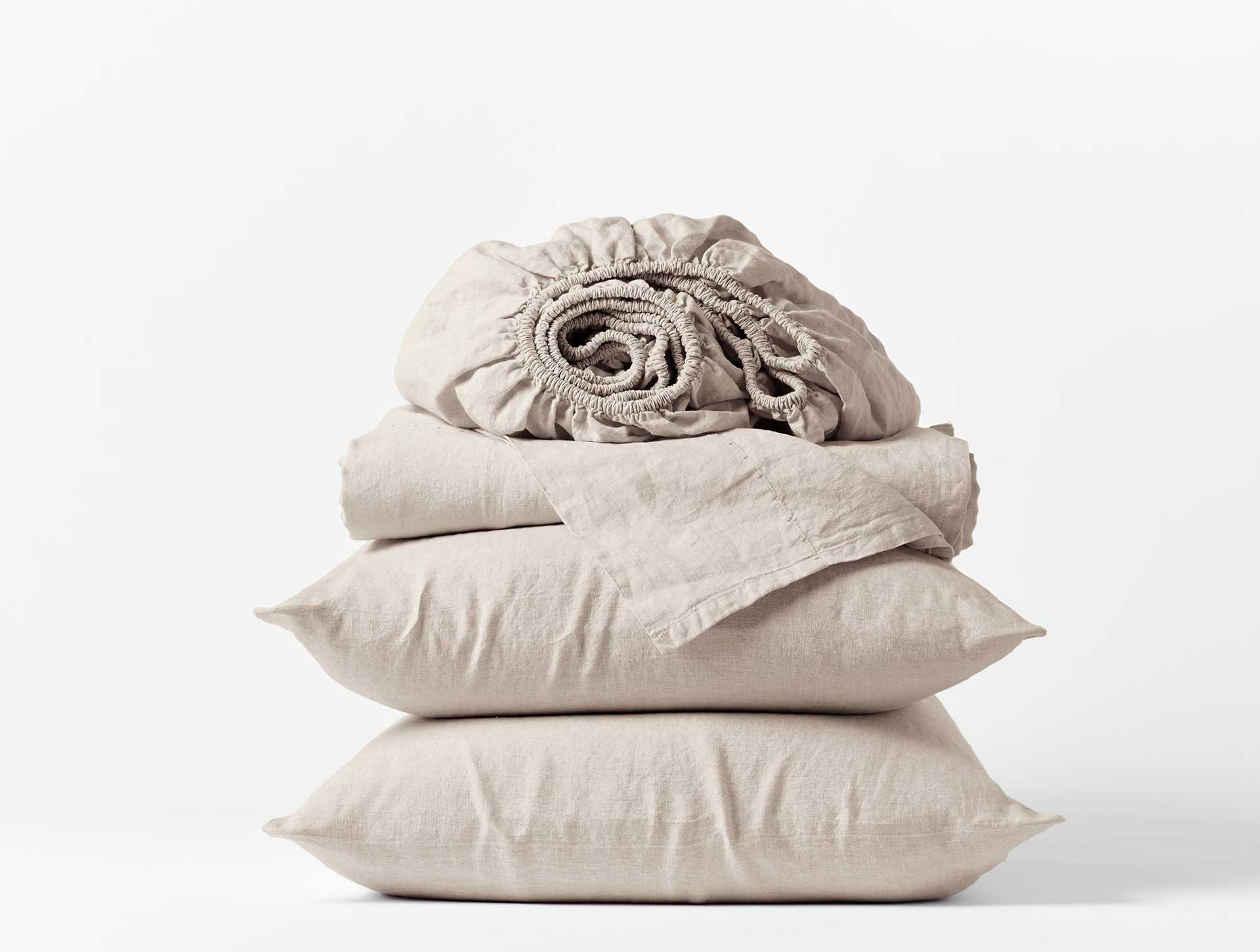
Your sheets also shape the overall sleep surface. Breathable sheets cannot turn an overly warm comforter into a cool one, but they can help create a more comfortable combination. For a linen-forward bedding setup, the Organic Relaxed Linen Sheet Set is described as GOTS-certified organic French linen woven in Portugal, with a relaxed feel that softens with use. It is a sheet set—not a comforter—so consider it as a separate foundation layer when coordinating your bedding.
Care instructions are part of the decision
A summer comforter may get regular use through the warmest part of the year, so make sure its care requirements fit your household. Some comforters are machine washable; others require professional cleaning or have restrictions based on their fill and construction. Do not assume that a natural-fiber comforter can be washed at home, or that a lightweight one will dry quickly. Always follow the specific label or manufacturer guidance.
If a comforter is washable, avoid crowding it into a small machine. The fill needs room to move so that water and detergent can circulate and rinse away. Use the recommended cycle and temperature, and dry it as directed. Overheating or leaving a damp comforter packed away can compromise its condition. If home laundering is not recommended, factor professional cleaning into your decision before bringing it home.
When using a duvet cover, wash the cover at the frequency and temperature recommended for its fabric, and check the insert’s instructions separately. A cover can help reduce direct contact with the insert, but it does not eliminate the need to care for the insert occasionally. Before storing a seasonal comforter, make sure it is fully dry and keep it in a clean, breathable storage space.
A straightforward checklist for comparing options
Product pages can make every comforter sound cloud-soft and cool. A short checklist helps separate useful details from atmosphere. Before deciding, look for the following:
- Fill material: Identify the exact fiber or blend, and whether it is used in the fill, shell, or both.
- Weight information: Check what is being weighed, the units used, and the size of the comforter.
- Warmth guidance: Look for a stated season, warmth rating, or intended-use description.
- Shell construction: Consider the fabric and weave, not only the fill.
- Dimensions: Confirm coverage for your mattress and how much overhang you prefer.
- Use and layering: Determine whether it is a stand-alone comforter or a duvet insert.
- Care: Review washing, drying, and professional-cleaning requirements.
If one of these details is missing, avoid filling in the blank with assumptions. For example, “linen” does not tell you the fill weight, and “lightweight” does not specify how a comforter will feel in your bedroom. Clear product information helps you make a more informed comparison; when important measurements are unavailable, treat them as unknown.
A cooler bed does not have to mean a bare bed
The best summer comforter is the one that gives you enough coverage without making the night feel stuffy. For some people, that means a very light fill in a breathable shell. For others, it means a midweight layer they can use with a fan, air conditioning, or a cooler room. Materials such as cotton and linen blends are worth exploring, but the finished construction, weight, and care instructions deserve equal attention.
Before you buy, picture the comforter in the setting where it will actually be used: your room temperature, your sheets, your sleep habits, and your preferred way of making the bed. Compare like with like, take weight figures in context, and check whether the item is designed for standalone use or layering. With those details in view, choosing a lightweight comforter becomes less about guessing and more about finding a comfortable balance—one that keeps the bed inviting even when the forecast says summer has arrived.